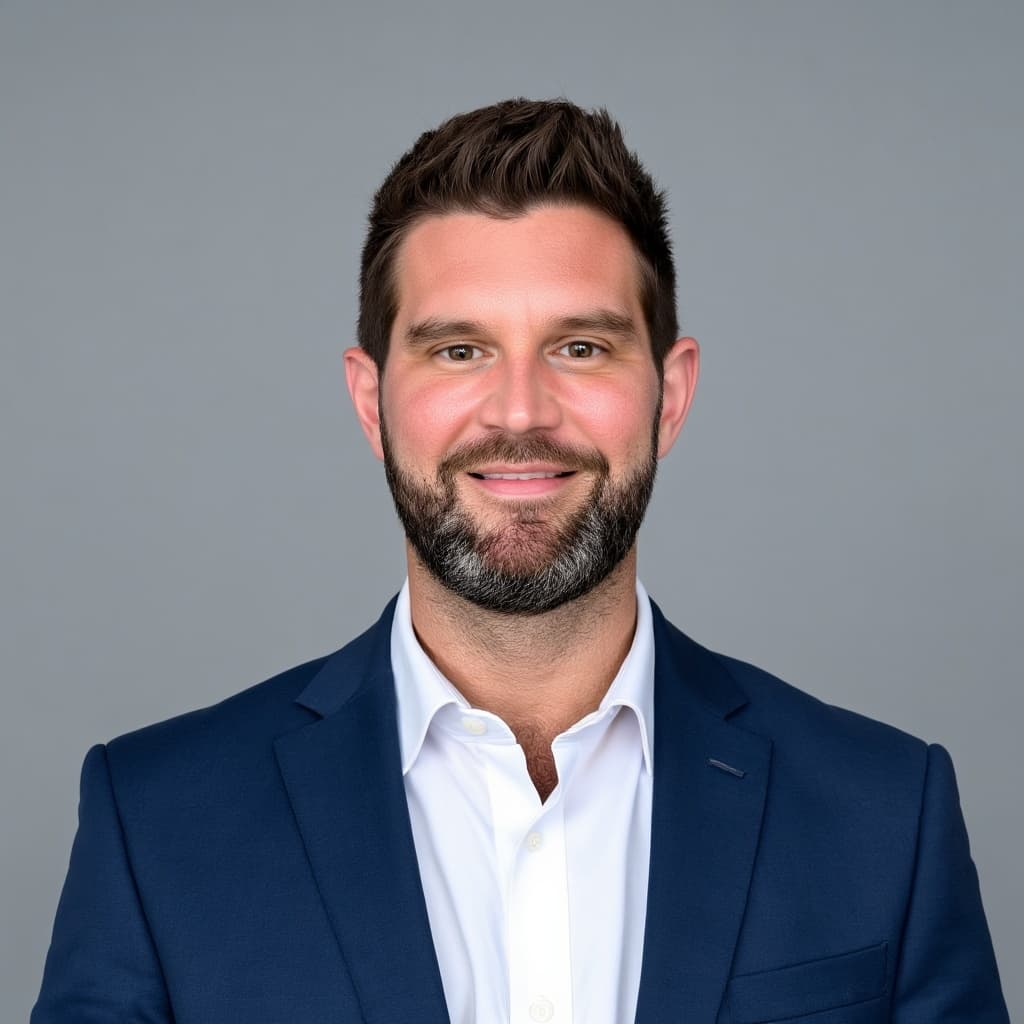
Dr Robert Laidlaw
Sydney-based medical doctor and health-tech entrepreneur. Founder of Claims Doctor; cosmetic injectables clinician. Full bio →
The Doctor-Entrepreneur Paradox
8 April 2026 · Dr Robert Laidlaw4 min read
Two operating systems
Medical school installs a particular operating system in your head. It is built around a core principle so old it is written in Latin: primum non nocere. First, do no harm.
This is not just a maxim. It is a decision architecture. When I was a neurosurgery registrar, every intervention was evaluated against a baseline question: is the expected benefit worth the certain risk? Uncertainty was the enemy. You gathered more data. You sought more opinions. You waited. The cost of action was weighed constantly against the cost of inaction, and in medicine, inaction is usually the safer bet.
Then I started a company.
Entrepreneurship runs on a different operating system entirely. Speed is a feature. Shipping something imperfect beats not shipping something perfect. The cost of inaction — missing the market window, losing the team, running out of runway — is existential in a way that clinical caution is not. Waiting for more data is a luxury you often cannot afford.
Running both operating systems simultaneously is, to put it diplomatically, an interesting experience.
Where they conflict
The tension shows up in specific, practical ways.
In medicine, you do not launch a new treatment without a trial. In startups, you launch and treat the launch as the trial. These are not compatible philosophies when the product is a clinical service. Claims Doctor sits precisely at this intersection — it is a technology company delivering a regulated health service. Every product decision has a clinical dimension. Every clinical decision has a commercial dimension.
Risk tolerance is the fault line. Clinicians are trained to be risk-averse because the downside of clinical error is catastrophic and irreversible. Entrepreneurs are trained — or self-select — to have high risk tolerance because the upside of bold moves is the only path to scale. When I am making a product decision at Claims Doctor, I have both voices in my head simultaneously. Sometimes they agree. Often they do not.
Speed versus safety is the obvious tension, but there is a subtler one: the relationship with uncertainty. Medicine teaches you to be uncomfortable with not knowing. Entrepreneurship teaches you to be comfortable acting without knowing. These are learnable skills, but they pull in opposite directions, and reconciling them requires constant deliberate effort.
Where they complement
Here is what nobody tells you about being a clinician-founder: the medical training is actually a significant advantage, in ways that go beyond domain knowledge.
Doctors are trained to take comprehensive histories — to ask good questions, to listen carefully, to build a model of a complex system from incomplete information. This is exactly what you do when you talk to customers. The consultation is not that different from the customer discovery interview, structurally. You are trying to understand someone's problem well enough to help them.
Clinical medicine also trains you to make decisions under uncertainty with incomplete information and time pressure. Every acute presentation is an exercise in probabilistic reasoning with imperfect data. The startup environment feels familiar, not foreign, to someone who has run a trauma call.
And — perhaps most importantly — medicine trains you to maintain composure when things go wrong, because in medicine, things go wrong and people are watching. The founder equanimity that investors talk about as a desirable trait is something clinicians develop by necessity over years of training.
The reconciliation
I do not think you fully reconcile the two. I think you learn to context-switch, and you get faster at it.
In a clinical consultation, the medical operating system runs. The bar is high, the documentation is rigorous, the patient is the only stakeholder that matters in the room. In a product meeting, the entrepreneur operating system runs. Ship, learn, iterate. The perfect is the enemy of the good.
The skill is knowing which context you are in and not letting the wrong system dominate. The clinical caution that makes you a good doctor will make you a slow founder if you let it run the product roadmap. The startup bias for speed that makes you a good founder will make you a dangerous clinician if you let it bleed into the consultation room.
Keep them separate. Draw the boundary clearly. And when you are not sure which side of the line you are on — that is usually a sign you need to slow down and think before you act.
It is, appropriately enough, a governance problem.
Next step
Explore ventures →
FAQ
- What is the doctor–entrepreneur paradox?
- Medical training rewards caution, peer review, and certainty-seeking, while startups reward speed, iteration, and acting with incomplete information. Founders who are also clinicians must context-switch deliberately so startup pace does not erode bedside standards, and clinical caution does not paralyse product progress.
- How does Dr Laidlaw reconcile speed and safety?
- By separating contexts: in patient care, the clinical operating system dominates with full documentation and conservative judgment; in product meetings, iteration and learning dominate—but only within regulatory and ethical guardrails appropriate for health services.
- Is clinical training useful for founders?
- Yes. History-taking maps to customer discovery, probabilistic reasoning maps to decision-making under uncertainty, and composure under pressure maps to leading teams through incidents. The skills are transferable when used with clear boundaries.
Related posts
- Welcome to My Blog
My first post — why this blog exists, my promise on AI transparency, and what I'm building across healthcare and technology.
- Why I Built Claims Doctor
Injured workers shouldn't wait weeks for a medical certificate. The story behind same-day WorkCover telehealth in NSW.
- Clinical Governance in the Age of AI
AI is reshaping healthcare delivery, but who's governing the governance? Thoughts on building safety frameworks that actually work.